What Is Better for a Complete Beginner in Crypto: Buying and Holding Bitcoin or Actively Trading Altcoins
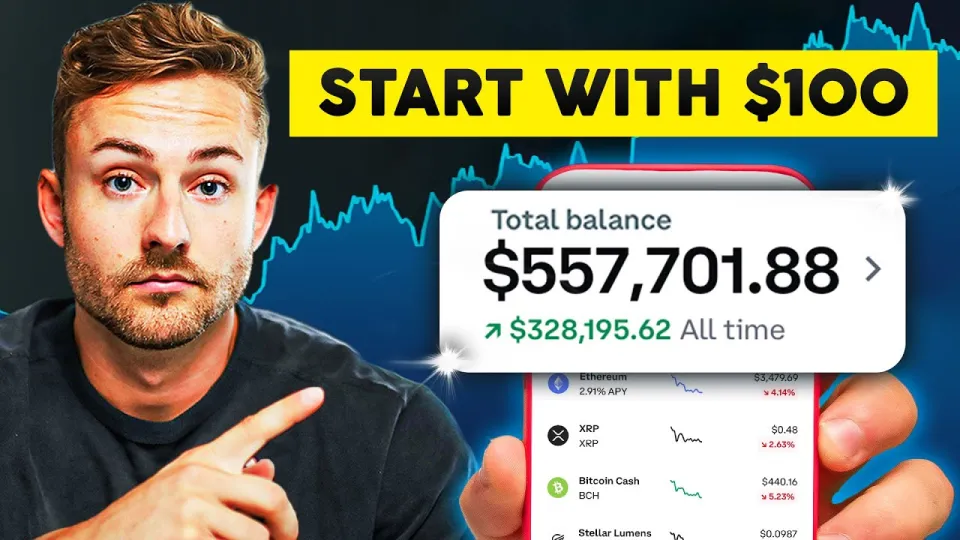
You can order the same kind of articles for your own video to boost it on YouTube and Google. Just message the Telegram bot @sat_sit_bot. Articles with your video embedded are written and posted by the bot itself — on popular topical sites (no ads). Your first 50 articles are free.
· based on the channel Craig Percoco
Key takeaways
- Craig Percoco frames crypto investing around three pillars: fundamentals, technicals and position organization, built over 7 years of trading and investing.
- Newcomers typically lose because of no system, no patience, no journal and poor risk management, not because of a lack of indicators.
- Spot buying on a regulated exchange is the lowest-risk entry point; leveraged futures trading can wipe out more than the initial deposit.
- A free trading education starter pack is available at https://bit.ly/3VHSOeT.
- Most beginner losses come from over-sizing positions and chasing breakouts with too little capital to matter.
For a complete beginner, buying and holding a small basket of large-cap crypto assets on a spot exchange is the better starting point than active trading, because it removes leverage, reduces the number of decisions you can get wrong and lets you learn market structure without risking liquidation. Trading only becomes sensible after you have a tested system, a risk plan and a journal — the three things most newcomers skip. Craig Percoco's beginner guide is built on exactly that split between fundamentals, technicals and organization, and you can start with the free trading education pack at the free trading course and starter resources.
Why crypto still attracts beginners despite the risk
Crypto is an emerging market with a market capitalization in the trillions and daily volume that rivals major equity exchanges, which is why it is framed as a chance at generational wealth. That potential is real but asymmetric: the same volatility that produces 10x moves also produces 80% drawdowns, and both happen inside the same cycle. A beginner who enters expecting a straight line up will size positions as if losses are impossible, which is the single most common way accounts die.
The honest framing is that crypto is a high-risk, high-reward allocation — money you can afford to lose entirely — and that the return comes from being early and patient, not from being busy. Percoco's stated goal is to help viewers behave like the top 1% of investors rather than like the crowd that buys tops and sells bottoms.
The fundamentals you should check before buying any coin
Fundamentals answer one question: does this asset have a reason to exist beyond its price chart? Before buying, work through a short checklist.
- What does the network do? Bitcoin is a settlement and store-of-value network; Ethereum is a smart-contract platform. If you cannot explain the product in one sentence, you do not understand the asset.
- Tokenomics. Look at total supply, circulating supply, inflation schedule and unlock cliffs. A token with large insider unlocks in the next 12 months faces structural selling pressure regardless of how good the technology is.
- Who is building and who is funding it? A public team, active development commits and transparent treasury management are baseline signals.
- Liquidity. Check daily volume on major exchanges. Thin order books mean wide spreads and slippage that eats small accounts alive.
- Narrative versus adoption. A trending narrative can pump a token for weeks, but only usage, fees and users sustain it across a cycle.
Percoco separates this fundamental layer from the technical layer deliberately: fundamentals decide what you buy, technicals decide when.
Technicals for beginners: timing entries without overcomplicating charts
Technicals are not a prediction machine; they are a way to enter at a price where your risk is defined. For a beginner, three tools cover most of the job: higher-timeframe trend (daily and weekly candles), support and resistance zones where price has repeatedly reversed, and volume to confirm whether a move has participation behind it.
A practical routine is to mark the range a coin has traded in for the last few months, buy near the lower boundary of that range in an uptrend rather than in the middle, and place a stop below the structure that would invalidate your idea. Position size follows from that stop: if you are willing to risk 1–2% of your account per trade, the distance to the stop determines how large the position can be. Beginners who skip this step and instead chase breakouts with tiny size end up exhausted — many small losses that never add up to a meaningful gain but steadily drain the account.
How to actually make money in crypto as a beginner
Money in crypto comes from three sources: directional exposure held over time, yield on assets you already own, and trading edge. Only the first is reliably available to someone with no track record.
- Accumulate and hold. Buy large caps on a schedule, keep them in self-custody or on a reputable exchange, and let the cycle work. This is the strategy that requires the least skill and the fewest decisions.
- Dollar-cost average. Fixed purchases smooth your entry price and remove the temptation to time a bottom that nobody can call in advance.
- Size up only with proven edge. Scaling capital into an untested strategy is how a $10,000 account becomes a $2,000 account. Prove the process on small size first, then increase.
- Take profits in tranches. Selling a portion on the way up converts paper gains into realized ones, which is the difference between a good cycle and a round trip.
The recurring failure pattern is wanting life-changing returns from capital too small to produce them, which pushes people into leverage. Leverage does not fix a small account; it shortens its life.
How to buy and sell crypto safely
Buying crypto takes minutes: register on a regulated exchange, complete identity verification, deposit fiat by bank transfer or card, and place a spot buy order for the asset you want. Card deposits are fast but carry higher fees; bank transfers are slower and cheaper. Once purchased, decide custody: leaving assets on an exchange is convenient but exposes you to counterparty risk, while a hardware wallet gives you full control and full responsibility for your seed phrase.
Selling is the mirror image, but the decision is harder. Set a plan before you buy — a target price range, a stop level and a time horizon — and write it down. When price hits either level, execute the plan rather than renegotiating with yourself in the moment. Keep records of every buy and sell, including fees, because tax reporting in most jurisdictions depends on cost basis and holding period.
The mistakes beginners repeat most often
A short list of failure modes shows up again and again in beginner accounts: no written system, no patience to let a thesis play out, no discipline to follow the plan, no backtesting to validate an idea, no journal to learn from results, poor psychology under drawdown, and weak risk management. Each of these is a process problem, not an intelligence problem, which is why they can be fixed with structure.
A second cluster of mistakes is social: trusting a stranger who promises guaranteed returns, following signals without understanding them, and treating a mentor's wins as proof that your own untested trading will work. Crypto has no shortage of people selling certainty. The useful filter is simple — if someone cannot explain the risk as clearly as the reward, the offer is not education, it is marketing.
All the resources from Craig Percoco
- Free trading education: https://bit.ly/3VHSOeT
- Crypto trading course and private team: https://bit.ly/3xhn47c
- Discord community access: https://bit.ly/3VmrO3r
- Full resource list: https://bit.ly/3zeM13u
- TradingView charting: https://bit.ly/3Xf9uvz
Final takeaway
For a complete beginner, spot buying and holding large-cap crypto with a written plan beats active trading, because it removes leverage and limits the number of ways you can be wrong while you learn. Fundamentals tell you what deserves your capital, technicals tell you when to enter with defined risk, and organization — a journal, a risk limit and a schedule — is what separates the small group that survives a full cycle from the majority that does not. Craig Percoco's video breakdown is a solid starting map for that process, and the free education pack at the free trading course and starter resources is the natural first step before you risk any capital.
Questions & answers
How much money do I need to start investing in crypto?
You can start with an amount small enough that losing all of it would not change your finances, since crypto is a high-risk allocation. The more important number is position size relative to your total capital: keep crypto a minority share of your portfolio and never use borrowed money or leverage at the start.
Do I need a mentor or paid course to trade crypto?
No course guarantees results, and a mentor cannot replace your own tested process. What a good course provides is structure — fundamentals, technicals, risk management and journaling — which is exactly what beginners lack. Start with free material, prove a strategy on small size, and only pay for education that explains risk as clearly as reward.
Why do most beginners lose money in crypto?
The usual causes are process failures rather than bad luck: no written system, no patience, no backtesting, no journal and poor risk management. Add over-sizing positions and chasing breakouts with capital too small to matter, and the account bleeds out through many small losses instead of one dramatic blow-up.
Should I buy Bitcoin or altcoins first?
Bitcoin and Ethereum are the most liquid and longest-established assets, which makes them the sensible first holdings while you learn how the market behaves. Altcoins can outperform in a bull run but carry higher risk of dilution, unlock pressure and outright failure, so size them as a smaller, speculative portion of the portfolio.
Source: How To Invest in Crypto as A COMPLETE Beginner [2025 GUIDE] · Markdown version